• Home
  • Bela Brook
  • Kimball Pond
  • Kuncanowet Forest
    • Elementary School Trails
    • Stone Farm
    • Stockwell Family Forest
  • News
  • About
Menu

Dunbarton Conservation

Welcome
  • Home
  • Bela Brook
  • Kimball Pond
  • Kuncanowet Forest
  • Conservation Easements
    • Elementary School Trails
    • Stone Farm
    • Stockwell Family Forest
  • News
  • About

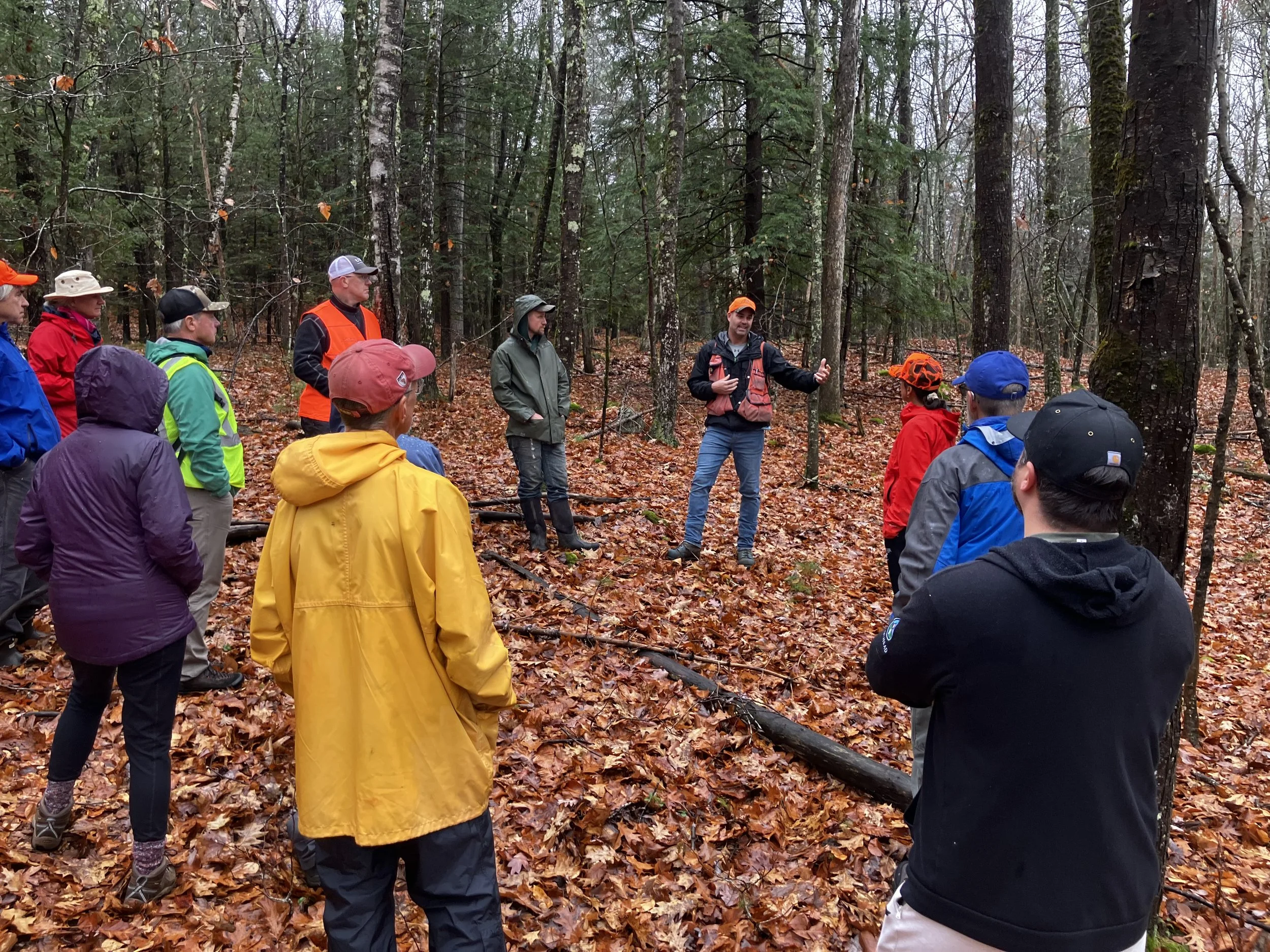
Forester Bryan Comeau explains how the sustainable timber harvest at Kimball Pond is designed to create a healthier environment for trees and wildlife.

How to love a forest explained

November 7, 2026

In spite of the drizzle, a group of Dunbarton residents turned out on Saturday morning for a site walk explaining the planning behind the upcoming sustainable timer harvest at the northeast end of the Kimball Pond Conservation Area.

They were treated to an exceptional opportunity to hear from, and ask questions of, experts including local forester Bryan Comeau, UNH Cooperative Extension wildlife biologist Matt Tarr and Merrimack Country Forester Tim Fleury.

The timber harvest will begin in December or January depending on the weather and will run for 6-8 weeks. The selective cutting of trees is designed to increase tree species diversity and improve wildlife habitat.

Sustainable timber harvest planned for Kimball Pond Conservation Area

October 19, 2026

The Dunbarton Conservation Commission plans a sustainable timber harvest in a portion of the Kimball Pond Conservation Area that is accessed by County Road.

The harvest has been professionally planned and will be overseen for the Conservation Commission by a licensed forester who lives in town.

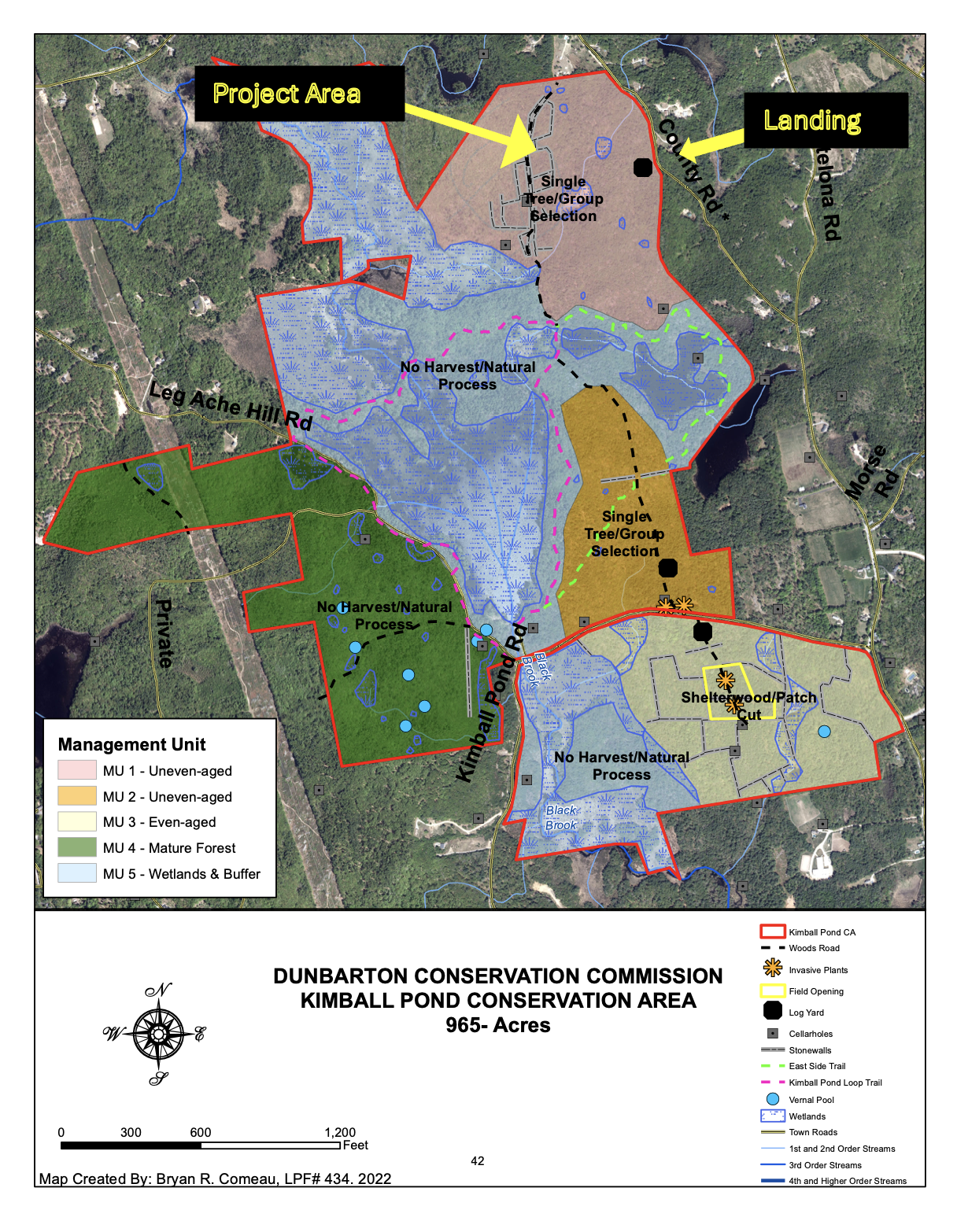
A fact sheet and map may be accessed by clicking here. The area to be harvested is indicated on the upper right corner of the map.

As background, the Town of Dunbarton received a $750,000 Forest Legacy Grant from the federal government more than 25 years ago to help purchase 650-acres of the now 1,000+ acre conservation area from a private party. The provisions of that grant, and our stewardship plan, require that we manage the 650-acres as a working forest.

Our focus with this is on best-practice, sustainable forestry to improve wildlife habitat. We are not clear-cutting the conservation area.

The timber harvest will begin in December or January, depending on the weather.

If you are interested in learning more, we are holding a site walk on Saturday, November 7 beginning at 9 a.m. at which our forester Bryan Comeau, Merrimack Country Forester Tim Fleury and UNH Extension Wildlife Biologist Matt Tarr will explain what is planned and what its effects will be on the forest and wildlife.

The site walk will begin at the logging landing (which is a small pull-out now that will be expanded before the harvest begins) which is marked by a black square on the map.
The endangered Blanding’s Turtle is common in Dunbarton because much of its habitat is conserved here.

Helping Turtles

May 15, 2026

Spring is here and turtles have started crossing roads as they migrate to their nesting habitats. If you encounter any injured or distressed turtles, a new organization, New Hampshire Turtle Rescue, can assist in their rescue and rehabilitation.

Its clinic in Nottingham is the only facility in New Hampshire licensed to care for the four endanger turtle species in New Hampshire: Blanding's Turtle, Spotted Turtle, Wood Turtle, and Eastern Box Turtle.

These species are slow to mature but live a very long time, leading to their populations relying heavily upon a relatively small number of reproductive individuals. According to New Hampshire Turtle Rescue, major threats to these populations include: car strikes, dog attacks, lawnmowers, and swallowed fishhooks.

The mission at New Hampshire Turtle Rescue is to provide comprehensive care for injured turtles, with the ultimate goal of releasing them back into their homes once they are fully recovered.

The organization has an informative website including a Help and Advice section.

If you encounter a turtle crossing the road, simply help it cross in the direction it is heading and do not relocate it. Snapping turtles can be carefully lifted by the very back of their shells while keeping clear of the danger zone to the front and sides of the shell. You can place them onto a car mat or piece of cardboard to drag them out of the road. A snow shovel is also a handy tool to keep in your car at this time of year for this purpose.

Before helping the turtle, use common sense and make sure you help yourself first by pulling off the road, putting your emergency flashers on, and checking for traffic before you exit your vehicle and while you are assisting the turtle. 

Older Posts →
Get notices of our hikes & trail days

The 13 Wonders of Dunbarton

The Bela Brook Conservation Area (Grapevine Road)

Kimball Pond Conservation Area (Kimball Pond Road)

Kuncanowet Town Forest and Conservation Area (Holiday Shore Drive)

Winslow Town Forest (Stark Lane) 

Stark Cemetery (Mansion Road)

Hopkinton Everett Flood Control Area (Everett Dam Road)

Long Pond (Long Pond Road)

Purgatory Pond (Purgatory Pond Road)

View from Burnham Hill (Rt. 13)

Rogers and Putney home sites (Robert Rogers Road)

Highest Point in Dunbarton and view from Mills Hill (Rt. 13) 900 feet).

Biggest boulder in Dunbarton (off powerlines on east side of Kimball Pond Rd.)

Geographic Center of New England (Stone Farm, Guinea Rd.)

Get your 13 Wonders Card